
Special Education’s Elephant behind the Trunk
Someone says the word “Elephant”… the image of its trunk pops right into your head.
Elephant trunks are interesting, but the most important thing about elephants is that
Elephants are BIG
The same thing happens with special education.
At our local school board meetings, I’ll often focus on our students with extraordinary needs. Those children who require extensive support and are often multiple years behind their general education peers. They are often struggling hard to learn, and in too many cases, we may actually not know how to reach or teach them at all.
These students are very important and need our focus, but they are a small fraction of our special education students (around 10% or fewer of students with IEPs and around 1% of the total student population).
The Unseen Elephant
What we seem to ignore is the 90% or more of disabled students who spend the bulk of their time in general education… probably more than 10 percent of all students, plus our disabled students who only have 504 plans and those who don’t quite meet the criteria for a disability diagnosis by schools (kids with ADHD, anxiety, dyslexia and other disabilities)… a population perhaps totaling 20 to 25% of our students (consistent with overall lifetime disability statistics).
Just looking at these students who DO have IEPs… their academic performance puts them substantially behind their general education peers. Disabled students with extraordinary needs tend to be assigned to the state Alternate Assessment or don’t participate in state academic assessments at all.
These grim results are based almost entirely on students who are supposed to be in general education.
What is going on?
But that is an extraordinarily small portion of the student population and it is a small portion of the Something is bad wrong.
These students cross all economic and ethnic groups and they are academically years behind their peers..
But they’re in the same general education classes at the same time.
What’s going on with them?
These students are considered to have mild, moderate, minimal disabilities by our school systems (or at least that is what they are receiving in terms of services)… yet they are falling far behind.. or are starting behind and not catching up.
We are failing these students.
And, as far as I can tell, we don’t know why and we don’t seem to be trying to find out.
In California, we don’t just track English Learners, we divide them into to cohorts based on where they are on their journey to mastering English.. we’ve just added a category for tracking Long Term English Learners – students who are struggling to learn the language (I think this is true elsewhere).
For Special Education, we do no such thing.
All students with IEP are tracked by the state (as far as I can tell and definitely n0ationally) as one, big blob in terms of graduation rates, academic performance, etc. even though we already collect data that can give us a good read on their current supports.
California and other states blandly report that our disabled students are one of our single worst performing groups academically … and no one notices or raises an eyebrow.
This erasing of disabled students who don’t have extraordinary support needs hurts both groups of students.
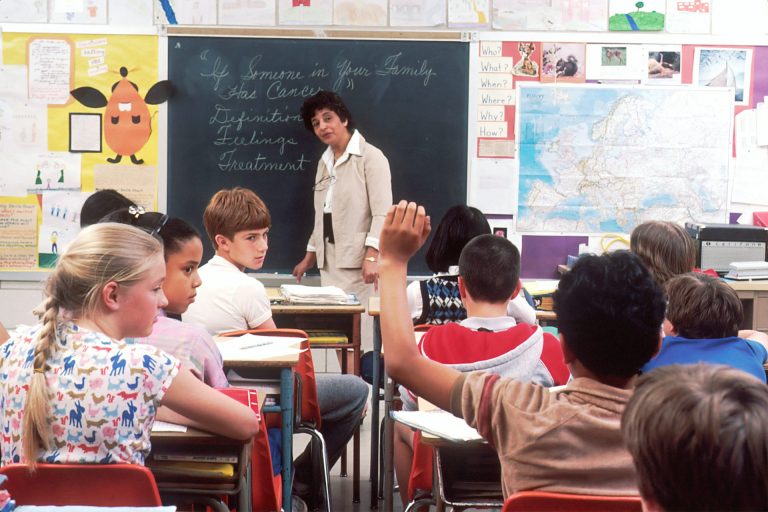
We ignore the fact that more than 10% of all students are disabled students with IEPs who spend most or all of their day in general education meaning that EVERY TEACHER IS A SPECIAL EDUCATION TEACHER… in a class of 25, at least 2 and as many as 6 students have an IEP, 504, or other disability diagnosis.
Yet most teachers have no training in teaching disabled learners… and too many don’t want to bother.
Our education system for our educators is broken.
And this segregated education system for educators drives a segregated education system for our students.
How will we ever have truly inclusive classrooms if teachers are not adequately trained to teach ALL of their students?
General education teachers are failing to teach a substantial portion of their students… whose responsibility is it?
Failure to Learn or Failure to Teach
I listen to a lot of people talk about education, particularly for disabled kids, and the phrase that makes me scream in my head is FAILURE TO LEARN.
These are kids.
We are the adults. Teachers are supposed to be trained professionals. Yet, we haven’t given them the responsibility or tools to teach a substantial portion of their classrooms.
There is an amazing opportunity here.
When I walk around my neighborhood, at every street corner there’s a cut out to allow people to come right up onto the sidewalk from the street. These were put in place for people with wheelchairs… but, what all of us find is that if you are a Parent with a baby stroller, or struggling with your luggage or groceries, ramps are awesome.
Ramps help everyone.
States that have instituted universal education strategies based on best practices for dyslexia have found that all students do better – whether they have dyslexia or not.
If we take the time to really look at why all of our disabled learners are struggling… not only will we be fulfilling our responsibility to educate everyone, but we may learn tools to help other students as well.